Investor Presentation · 2026 — Digitizing CBT via visual tools

The Therapist Toolbox

Visual therapy platform for practicing CBT.

Helping patients express what they cannot say.

BVTER.LIFE

BvTer — purple-to-teal butterfly emerging from a green chrysalis
Context

CBT practitioner? Your day is built on 1:1 talk.

Narrative interviews

Early sessions depend on the patient describing events, feelings and thoughts — in words.

12–15
weekly 1:1 sessions offered per patient under NICE guidelines

Session-by-session discovery

Initial assessment of anxiety and depression unfolds over multiple 1:1 sessions.

12–20
sessions in an average CBT course — the first ~4 are assessment

Documentation after hours

Notes, summaries and treatment plans are written up manually, after the patient leaves.

20–30 min
of note-writing per 50-minute session, mostly unpaid
The Problem

The same paradigm for over 150 years.

The constraints of current psychological therapy.

The struggle

Patients struggle to verbally describe experiences.

Practitioners struggle to verbalize abstract concepts.

Today
  • Worldwide practitioner scarcity
  • 1:1 narrative interviews
  • No technological means
  • Practitioner presence is mandatory
The result
  • Practitioner as a bottleneck
  • Limited communication with the patient
  • Relative diagnosis accuracy
  • Long duration of therapy
  • Limited protection of patient privacy
  • Burnout
The Solution

BvTer turns visual exploration into clinical insight.

Patient mobile app

A safe, intuitive way to express difficult emotions — without words.

Guided therapeutic interactions through visual choices. Flows walk the patient through an event: naming the thoughts behind it and giving them a face, rating feelings on visual scales, locating them in the body. Patients record their reflections in their own voice and listen back — reflection becomes part of the therapy itself. Fully GDPR-compliant: no patient identity is linked to therapy results.

Practitioner back office

Selections become structured emotional signals a clinician can read.

Every choice generates structured signals the practitioner can interpret: events, feelings, thoughts, physical symptoms. Patient history, session summaries, documentation and treatment planning — organized automatically, not typed after hours.
MVP → Vision. The MVP delivers diagnosis flows — structured discovery and assessment. The vision extends into treatment flows, enabling the full therapeutic process on the platform.
Solution · Patient App

The patient app side — intuitive and visual.

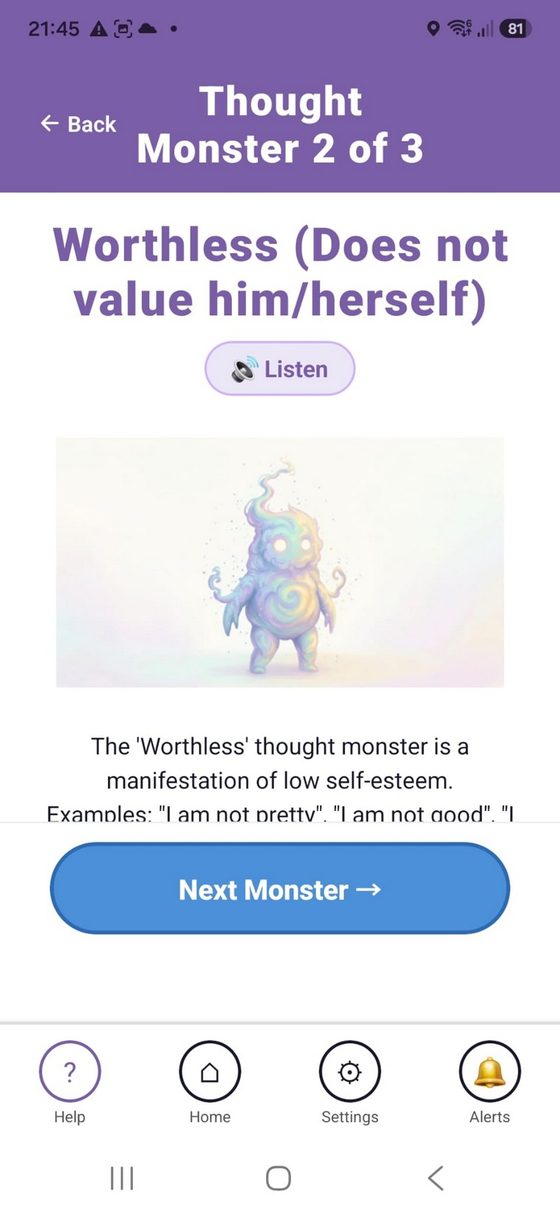
BvTer app: thought monster character screen
Thoughts become characters
Abstract thoughts get a face the patient can point to.
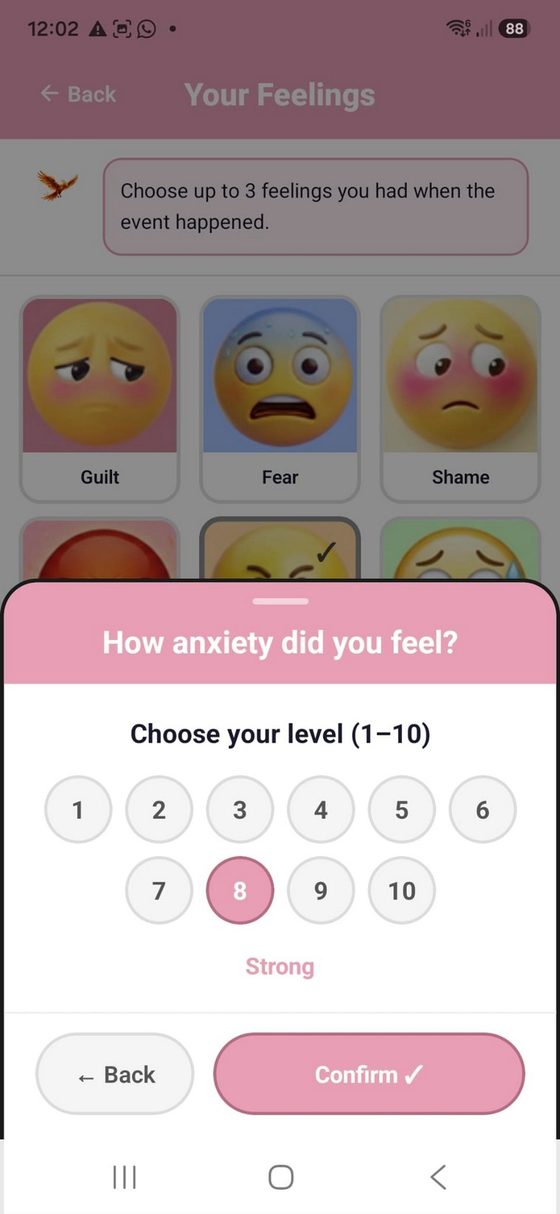
BvTer app: visual feelings and intensity scale
Visual intensity scales
Feelings rated on scales even a child can use.
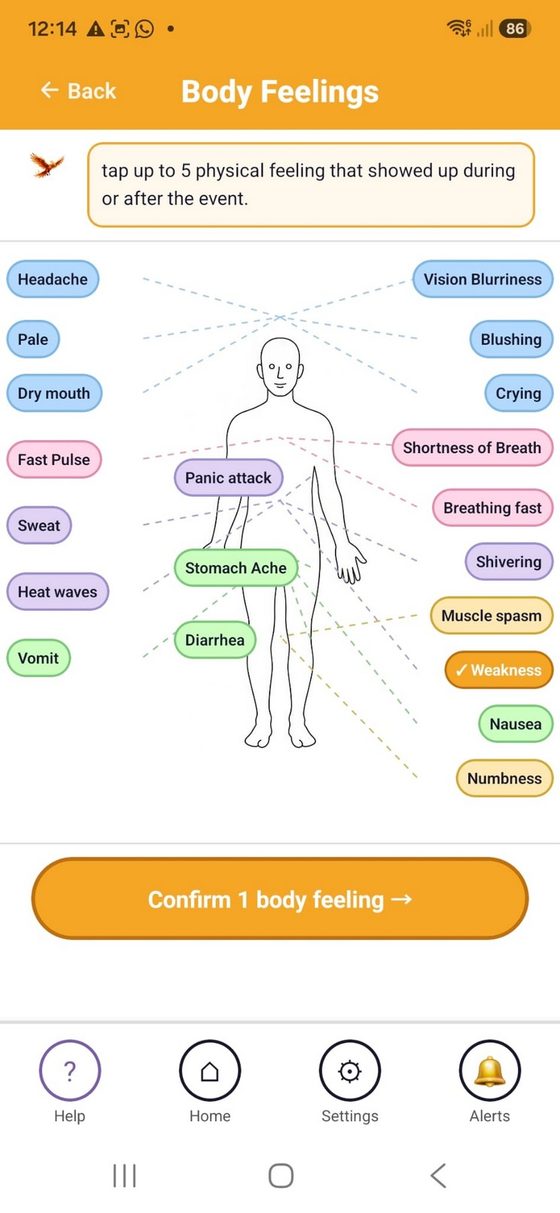
BvTer app: body feelings map
Body pain map
Physical feelings located, not described.
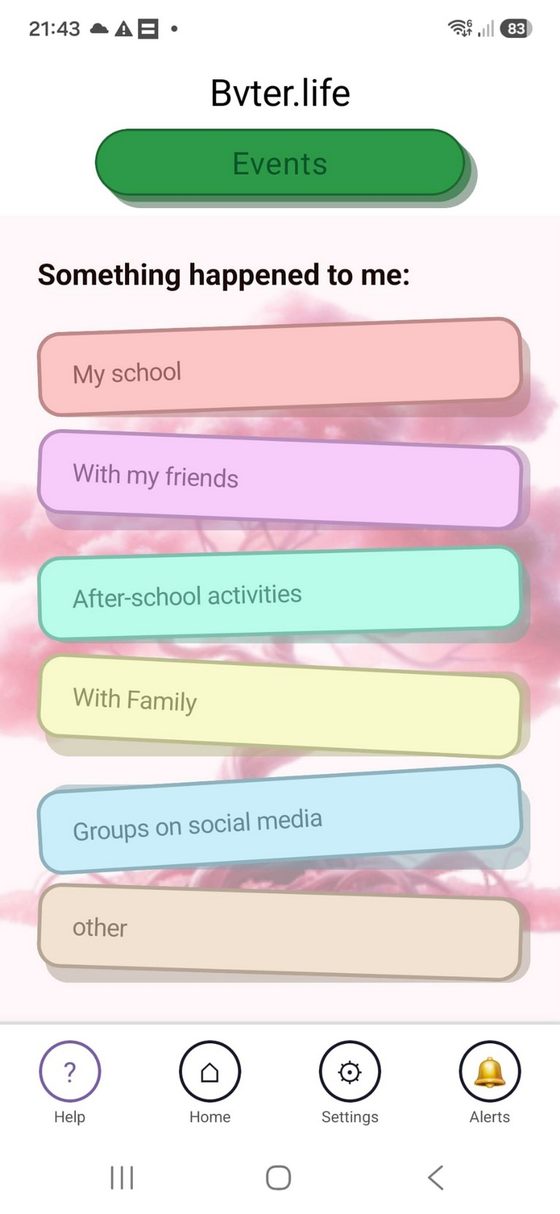
BvTer app: guided event selection
One guided step at a time
Each feeling is named, confirmed and logged.
Visual content
Animated and static, with sketches.
Adjustable discovery flows
Use flows as-is, or adjust them to the patient.
Voice recording
Patients record reflections and listen back.
Language agnostic
Visuals work in every market and language.
Why it works

One visual language — any age.

Therapy has always run on words. BvTer replaces the blank page with a visual language patients already speak — so the work starts on the first tap, not after months of building vocabulary.

A shared language across the age gap
A young patient and an adult therapist rarely share the same words — but they share the same picture. Visual choices give both sides one common reference, so meaning isn't lost in translation between generations.
Externalization a child can point to
Instead of naming an abstract feeling, the patient turns it into a character they can see and point at. “That monster” is far easier to talk about than “my low self-worth” — and it works whether the patient is 8 or 80.
No vocabulary barrier
Rating a feeling on a visual 1–10 scale, or tapping where it hurts on a body map, needs no clinical or emotional vocabulary. The patient communicates precisely without having to find the right words — the exact barrier that slows therapy with children and adolescents.
The native medium of this generation
Young patients relate to a guided visual app the way they relate to everything else in their world. It lowers resistance — “I don't feel like talking” — and turns reflection into something they actually want to do.
Their own voice, their own pace
Patients record reflections and listen back, so self-reflection becomes part of the therapy itself — not homework they skip.
A clean signal for the therapist
Every visual choice becomes a structured emotional signal the practitioner can read, consistent across every patient regardless of how verbal they are.
Solution · Back Office

Admin made easy — the practitioner back office.

One workspace for the entire practice.
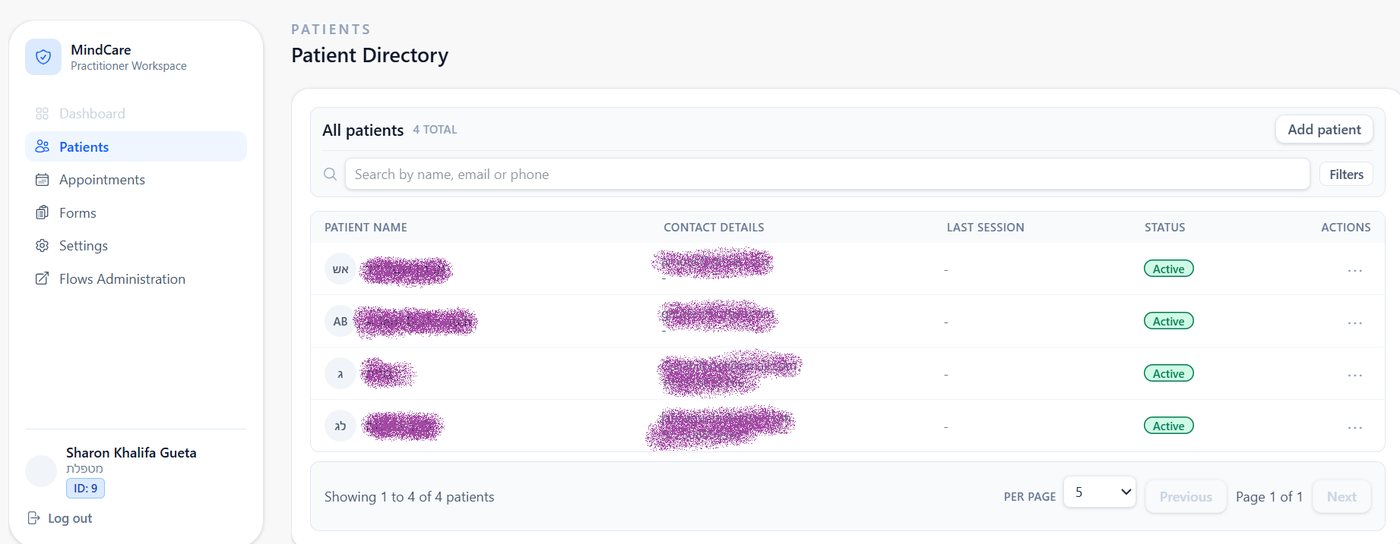
BvTer practitioner back office: patient directory
Patient management
Enablement, profiles and full history in one place.
Schedules
Session planning across the whole caseload.
Documentation
Session summaries and reports, generated not typed.
Historical interpretation
Patterns surfaced from past documentation.
Structured log
Every event, thought and feeling, searchable.
Treatment planning
From assessment to a structured treatment flow.
The Value

More patients, better assessed, less admin.

Up to 30%
time efficiency — enabling practitioners to treat more patients without compromising quality.
Communication via visual means
Helps patients express what words cannot carry.
The medium of this generation
Patients relate more to digital tools, and feel more comfortable and secure.
Standardised clinical assessment
Improves assessment quality with structured insights for therapists.
Ready-to-use therapeutic flows
Adjustable flows for various anxiety and depression groups.
Advanced patient confidentiality
A privacy-first tool practitioners can offer with confidence.
Language agnostic
Visual content crosses borders: one platform for every market.
Proof

Heard from both sides of the session.

The patient

“I enjoyed working in the app so much. It got me into my own head and my own heart, and even into what I feel in my body. It's the first time I really understand.”

— Girl, 9½ · closing feedback after a course of therapy run entirely through the app.

The practitioner

“I just came out of a session with a sweet patient. She chose an event, and along the way realized it reminded her of another, more important one. What she loved most was recording her own thoughts and feelings. At first she didn't want to open the app — 'I don't feel like it' — resistance. Then, once she started, she couldn't stop: recording herself, listening back, adding more, explaining to me and to herself. It was fascinating. It shows how important reflection and interactive work are.”

— Clinical psychologist, after a live patient session, June 2026.

Go-to-market

To the market, from inside the clinic.

The foundation

It starts with real experience

The method is grounded in 30+ years of clinical practice: exercises and visual mapping tools designed by a practicing clinical psychologist specializing in child and adolescent CBT.

Now

MVP under practitioner trials

A working app and back office, in real sessions today through our chief scientist's practitioner network in Israel.

In parallel

Seeding the next generation

CBT teaching institutions receive the platform free of charge, embedding BvTer in the teaching process — every graduating cohort enters practice already fluent in it.

Market

35,000–43,000 CBT practitioners in our core markets.

MarketCBT poolBasis
Germany16,000–20,000~40,000 licensed psychotherapists; CBT the most-applied method (~40–50%).
Netherlands~11,000VGCt, the Dutch CBT association, has 11,000 members (2025).
France + Lux3,000–5,000AFTCC ~2,670 members plus AFFORTHECC; CBT a growing share of ~58,000 psychologists.
Israel3,000–4,00015,807 psychologists, 13,266 under retirement age; CBT growing via ITA.
Belgium2,000–3,000Two CBT associations (VVGT, AEMTC) over a sizeable clinical workforce.
Core total35,000–43,000Association memberships + licensing data.
3–5%
of the core pool is all our sales plan assumes.
€6K
target ARR per practitioner from mid-2027.
Market · Expansion

Beyond the core: Europe, then North America.

Today · Core markets
35–43K

CBT practitioners in Germany, Netherlands, France + Lux, Israel and Belgium — the launch pool.

Next · Full Europe
120K+

psychotherapists across Europe (EAP membership); 54 national CBT associations federated in EABCT.

Then · North America
106K+

licensed psychologists in the US alone — where CBT is the most-practiced orientation.

Pricing

Accessible first: the market must feel the value.

Most practitioners believe they are "good as is." Low-friction adoption does the education that no campaign can.

2026
Free
every incoming customer
Jan 2027
€3K
per year (€250 / month)
Jun 2027
€6K
per year (€500 / month)
2028+
€9K
upside; plan stays at €6K
Financial Plan

Conservative by design.

€4.6M
conservative revenue by year 4.5.
€3M
cost run-rate at that point.
Year 2
breakeven in the upside case.
The Request

€1.3M, with €1.2M of state funding behind.

Investor capital€1.3M
State funding (non-dilutive)€1.2M
Three-year runway€2.5M
10%
equity offered, on a ~€25M valuation.
€6M
projected ARR by 2030 anchoring the valuation.
3 yrs
of runway secured on conservative projections.
Team

Clinicians, technologists, operators.

Dr. Sharon Khalifa-Gueta
CEO · Product
Art historian; visual culture and digital humanities.
Dr. Batia Toussia-Cohen
Chief Scientist
Clinical psychologist; child and adolescent CBT.
Arnon Shtalrid
Arnon Shtalrid
Visual Technology
Visual content platform and production pipeline.
Leonard Perry
Leonard Perry
AI Technology · Operations
CTO for AI initiatives, SnT, University of Luxembourg; ex-head of R&D at Rakuten Viber.
Eddie Berkovitch
Eddie Berkovitch
Marketing · Sales
PhD researcher in cognitive engagement and human–AI interaction.
BvTer butterfly logo

Instead of waiting for words, therapy can start with what patients can show.

Join the round: €1.3M to open the European CBT market, with €1.2M of state funding already multiplying every euro you invest.

Thank you.
BVTER.LIFE
Optional · Appendix
Optional Differentiation

Built for the method, not the calendar.

Paper card sets: one country, one language.
Digital visual library: language-agnostic, clinician-curated, always growing.
Practice tools that manage scheduling and billing.
A tool that supports the therapy itself: exploration, assessment, treatment planning.
Patient data locked to identity, hard to research.
Privacy-first architecture: GDPR-compliant, and a researchable anonymized database.
Optional Competition

Adjacent players solve adjacent problems.

WhoWhat they doWhat they miss
Practice-management platforms
SimplePractice, TheraNest, local EU systems
Scheduling, billing, notes and telehealth for the practice.Run the practice, not the therapy itself.
Self-help CBT apps
Woebot, Wysa, CBT Thought Diary
Chatbot and diary exercises sold directly to consumers.No practitioner in the loop, no clinical control.
Blended-care platforms
Quenza, Minddistrict
Text-based homework and care paths between sessions.Form-filling and words; nothing visual or in-session.
Therapeutic card sets
paper decks used in session
Visual prompts for in-session exploration.Analog: one language, no structure, no data.
Optional Go-to-market · Detail

Sales reps scale it; educators and conferences seed it.

Direct B2B sales

Private practitioners and clinics in Germany, Netherlands, France + Luxembourg and Israel.

30–50
new customers per sales rep, per year

Educational institutions

Free of charge for institutions teaching CBT: every graduating cohort enters practice already fluent in BvTer.

€0
for teaching programs, by design

Conferences and showcases

Live presentations and demos at CBT conferences drive the market education this category needs.

2027
World CBT Congress as inflection point