Investor Presentation · 2026 — Digitizing CBT via visual tools
The Therapist Toolbox
Visual therapy platform for practicing CBT.
Helping patients express what they cannot say.
BVTER.LIFE
Visual therapy platform for practicing CBT.
Helping patients express what they cannot say.
BVTER.LIFEEarly sessions depend on the patient describing events, feelings and thoughts — in words.
Initial assessment of anxiety and depression unfolds over multiple 1:1 sessions.
Notes, summaries and treatment plans are written up manually, after the patient leaves.
The constraints of current psychological therapy.
Patients struggle to verbally describe experiences.
Practitioners struggle to verbalize abstract concepts.
Guided therapeutic interactions through visual choices. Flows walk the patient through an event: naming the thoughts behind it and giving them a face, rating feelings on visual scales, locating them in the body. Patients record their reflections in their own voice and listen back — reflection becomes part of the therapy itself. Fully GDPR-compliant: no patient identity is linked to therapy results.
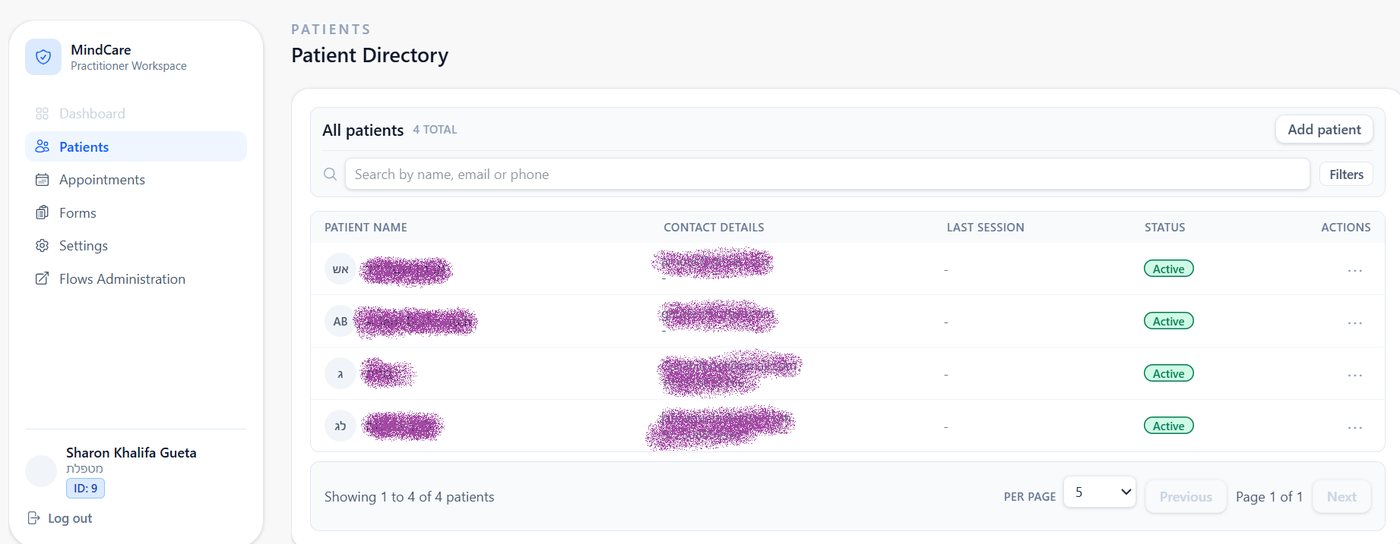
Every choice generates structured signals the practitioner can interpret: events, feelings, thoughts, physical symptoms. Patient history, session summaries, documentation and treatment planning — organized automatically, not typed after hours.
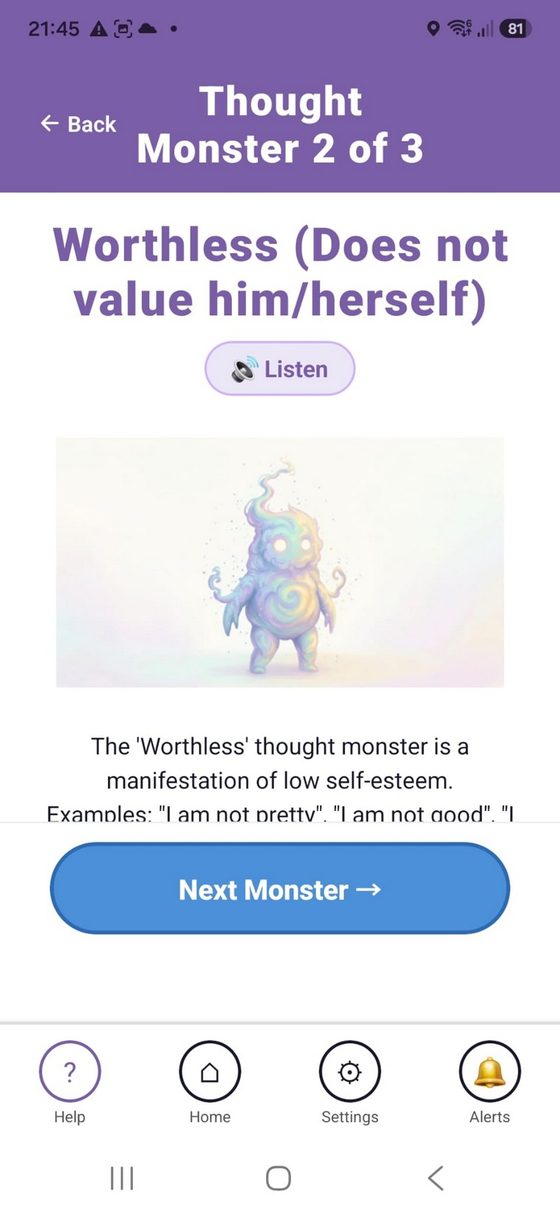
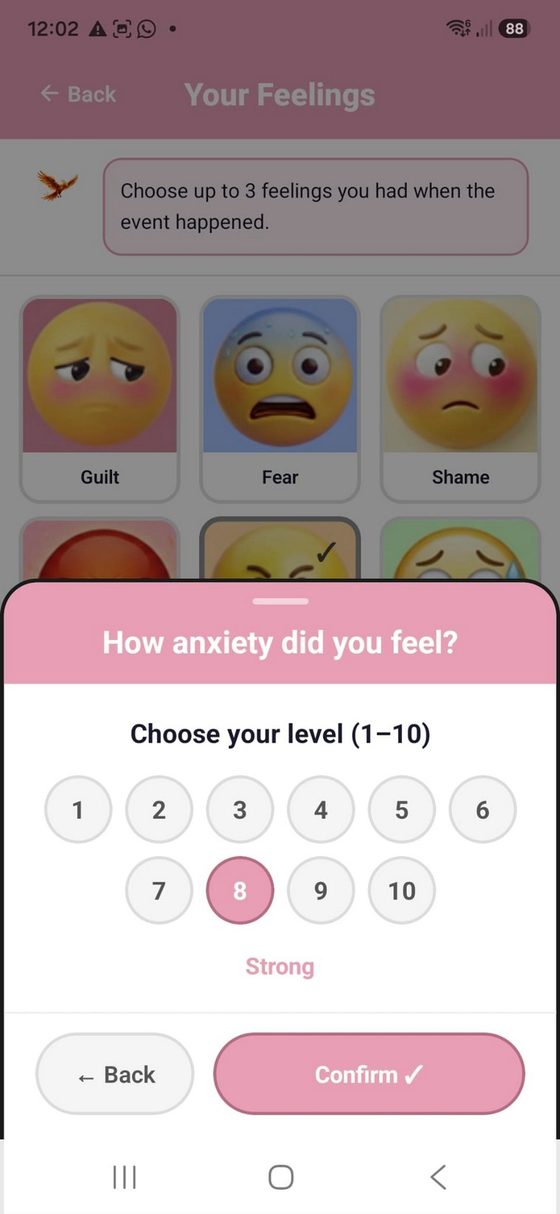
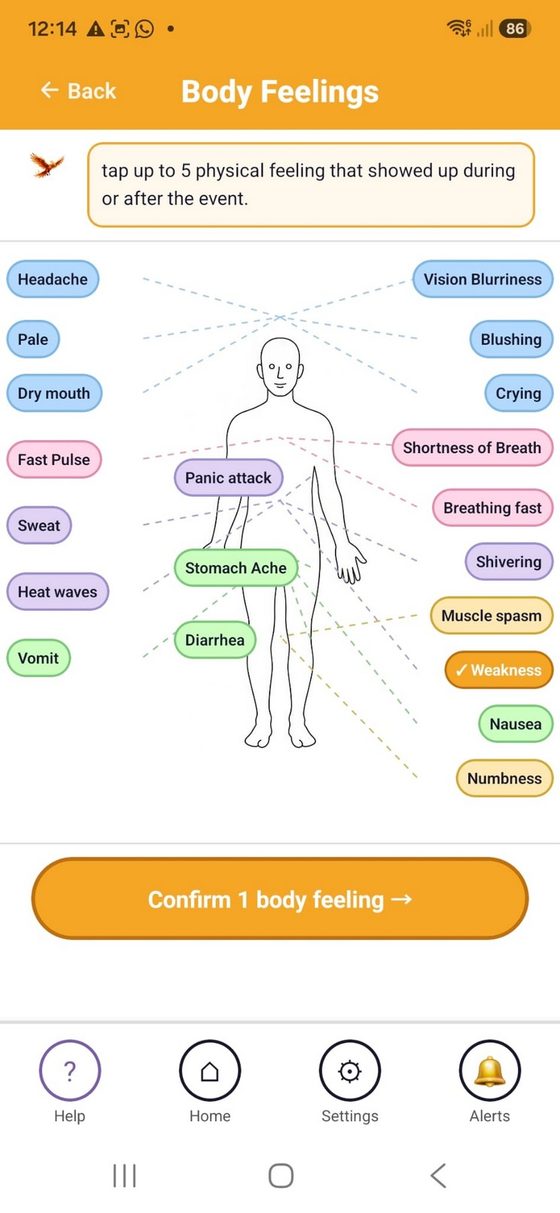
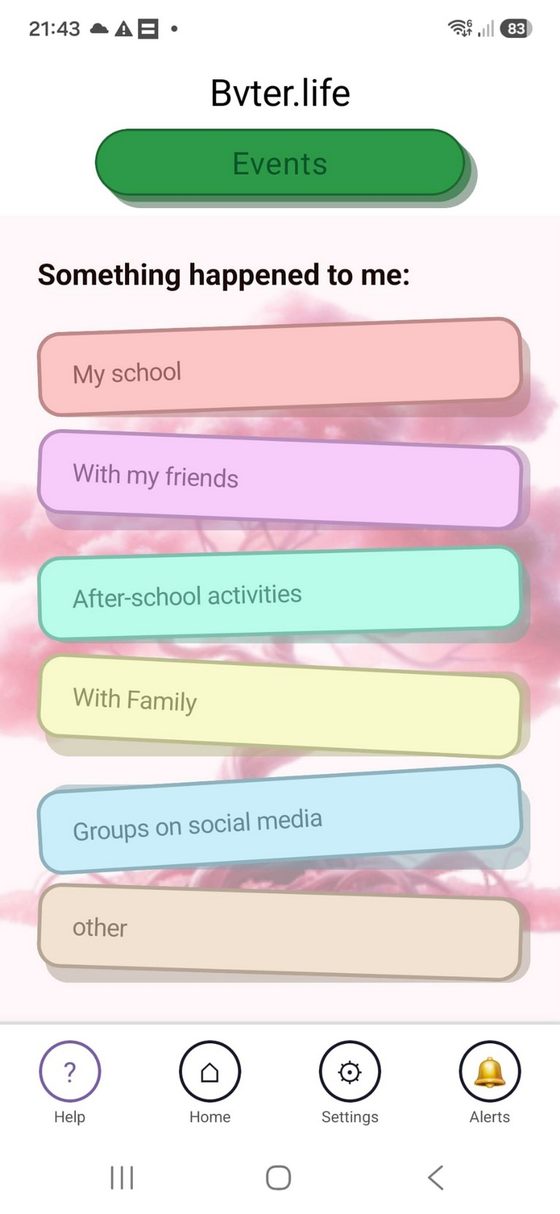
Therapy has always run on words. BvTer replaces the blank page with a visual language patients already speak — so the work starts on the first tap, not after months of building vocabulary.
One workspace for the entire practice.
— Girl, 9½ · closing feedback after a course of therapy run entirely through the app.
— Clinical psychologist, after a live patient session, June 2026.
The method is grounded in 30+ years of clinical practice: exercises and visual mapping tools designed by a practicing clinical psychologist specializing in child and adolescent CBT.
A working app and back office, in real sessions today through our chief scientist's practitioner network in Israel.
CBT teaching institutions receive the platform free of charge, embedding BvTer in the teaching process — every graduating cohort enters practice already fluent in it.
| Market | CBT pool | Basis |
|---|---|---|
| Germany | 16,000–20,000 | ~40,000 licensed psychotherapists; CBT the most-applied method (~40–50%). |
| Netherlands | ~11,000 | VGCt, the Dutch CBT association, has 11,000 members (2025). |
| France + Lux | 3,000–5,000 | AFTCC ~2,670 members plus AFFORTHECC; CBT a growing share of ~58,000 psychologists. |
| Israel | 3,000–4,000 | 15,807 psychologists, 13,266 under retirement age; CBT growing via ITA. |
| Belgium | 2,000–3,000 | Two CBT associations (VVGT, AEMTC) over a sizeable clinical workforce. |
| Core total | 35,000–43,000 | Association memberships + licensing data. |
CBT practitioners in Germany, Netherlands, France + Lux, Israel and Belgium — the launch pool.
psychotherapists across Europe (EAP membership); 54 national CBT associations federated in EABCT.
licensed psychologists in the US alone — where CBT is the most-practiced orientation.
Most practitioners believe they are "good as is." Low-friction adoption does the education that no campaign can.
| Investor capital | €1.3M |
| State funding (non-dilutive) | €1.2M |
| Three-year runway | €2.5M |





Join the round: €1.3M to open the European CBT market, with €1.2M of state funding already multiplying every euro you invest.
| Who | What they do | What they miss |
|---|---|---|
| Practice-management platforms SimplePractice, TheraNest, local EU systems | Scheduling, billing, notes and telehealth for the practice. | Run the practice, not the therapy itself. |
| Self-help CBT apps Woebot, Wysa, CBT Thought Diary | Chatbot and diary exercises sold directly to consumers. | No practitioner in the loop, no clinical control. |
| Blended-care platforms Quenza, Minddistrict | Text-based homework and care paths between sessions. | Form-filling and words; nothing visual or in-session. |
| Therapeutic card sets paper decks used in session | Visual prompts for in-session exploration. | Analog: one language, no structure, no data. |
Private practitioners and clinics in Germany, Netherlands, France + Luxembourg and Israel.
Free of charge for institutions teaching CBT: every graduating cohort enters practice already fluent in BvTer.
Live presentations and demos at CBT conferences drive the market education this category needs.